
Scavenger Hunts for Zoos, Aquariums & Museums
Most visitors walk past the best exhibit in the building without stopping. A hunt gives every family, school group and member a reason to slow down, look closer and read the sign — and it hands you a feed of what they loved most.
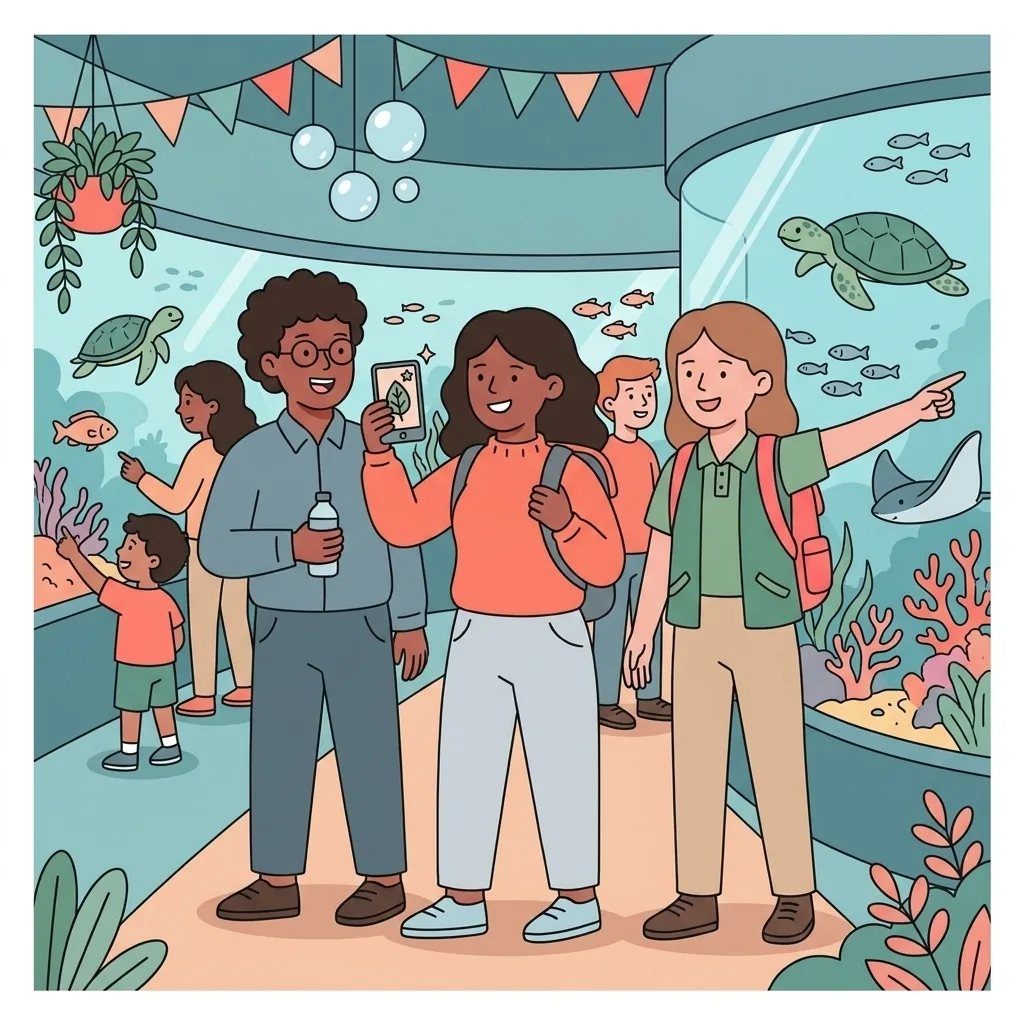
Why venues turn a visit into a hunt
Zoos, aquariums, museums, science centres and gardens all share the same problem: visitors rush, skim and leave without the part you most wanted them to see.
Visitors actually stop and look
A mission that asks for the stripes on a tiger or the date on a painting turns a walk-past into a two-minute stop. The trivia answers are on your signs, so people read them.
Quiet galleries get traffic
Put a five-point mission in the wing nobody finds and watch the crowd follow. A hunt is the cheapest way to steer people around the building.
Every photo lands in one feed
Visitor photos and videos collect in one place instead of disappearing into camera rolls — ready-made content for your socials, and a clear view of which exhibits people love.
Exhibit mission ideas you can copy
Swap in your own animals, galleries and signs. The best missions are the ones that only work in your building.
The zoo safari
For families and school groups doing the whole loop. Roaring encouraged.
- photo A selfie with a giraffe in frame. Bonus if it is looking at the camera.
- video The whole team balances on one leg like a flamingo for ten seconds. No wobbling.
- trivia What colour is a polar bear's skin under all that white fur?
- photo Copy the pose of any animal you see and get a photo side by side.
- gps Check in at the reptile house. It is at the far end of the park for a reason.
The aquarium dive
Tanks, tunnels and touch pools — missions that work in the dark and through the glass.
- photo Snap a shark mid-swim. Bonus if you catch its teeth.
- video Narrate the penguins like a nature documentary for fifteen seconds.
- trivia How many hearts does an octopus have?
- photo Track down a clownfish hiding in its anemone.
- photo Lie back in the underwater tunnel and shoot straight up at whatever swims over.
The museum quest
Art, history and natural history. Every answer is on a label somewhere in the building.
- photo Recreate the pose of a portrait in the main gallery and photograph yourself beside it.
- trivia What year was the oldest object in the Egyptian room made? The label has the answer.
- video Ten seconds as a museum guide, explaining your favourite piece to camera.
- photo Find the biggest skeleton in the building and fit the whole thing in one shot.
- photo Spot an animal hiding in a painting. Dogs count. Dragons count double.
Science centres and gardens
Hands-on exhibits and big outdoor grounds, where GPS check-ins really earn their keep.
- video Film the most impressive experiment you can run at an interactive station.
- gps Check in at the glasshouse on the far side of the gardens.
- trivia How tall is the tallest plant in the tropical house? Read the marker.
- photo Photograph a flower in every colour of the rainbow. Seven photos, one point each.
- photo Get your whole team in one photo under the planetarium dome before the next show.
Ways venues run a hunt
One always-on hunt for walk-in visitors, plus special ones for the days you want people talking about.
A self-guided trail at the entrance
A QR code by the ticket desk and on the map. Families scan it on the way in and the hunt guides them round the whole site.
Field trips with something to show for them
Teachers get a worksheet students actually finish, and every answer and photo comes back as evidence for the lesson after.
Seasonal hunts that bring people back
A Halloween trail, a summer holiday challenge, a new-exhibit launch. A fresh hunt is a reason for members to visit again.
Birthday parties and private hire
Hand party groups and corporate bookings their own hunt with its own leaderboard. It fills the hour between arrival and cake.
The feed shows you what landed
See which missions got completed and which exhibits got the most photos, then rewrite the trail for next season.
Setting one up
An afternoon with your site map is enough for the first version.
Walk the route you want visitors to take
Ten to fifteen missions, roughly one per area, mixing photo, video, GPS and trivia. Put the biggest points where you want the most footfall.
Put the QR code where people already queue
The ticket desk, the map, the entrance sign and the café. Visitors scan and start playing in seconds, with no download required.
Let it run
No staff needed on the floor. Submissions land in the feed on their own, and you can swap missions whenever an exhibit changes.
Questions venues ask
No. Visitors scan your QR code or tap the link and start playing right away, with no download required. Playing never costs a visitor anything.
Photo, video and trivia missions work anywhere. GPS check-ins use the phone's location, which is less precise deep inside large buildings, so save those for outdoor areas, entrances and separate buildings on your grounds.
The opposite, if you write it well. Every mission points at something in front of them — an animal, a label, a painting — so the phone comes out to answer and goes back in again.
Yes. Create a separate hunt for each group so they get their own leaderboard and feed, or let visiting teachers build one themselves from your mission ideas.
A single hunt is a one-time purchase by player count: $39.99 covers up to 50 players and $89.99 covers up to 100. Venues with steady visitor traffic usually want Unlimited at $249.99 a month, which removes the cap on players and on how many hunts you run — see pricing.
Give your visitors a reason to look closer
Build a trail in an afternoon, put one QR code by the entrance, and watch the feed fill up with your exhibits. Free to try, and always free for visitors to play.