
You have a team that needs an hour together that is not a slide deck, a budget that will not stretch to a rope course, and a calendar slot on a Thursday afternoon. A scavenger hunt fits that slot better than almost anything else, as long as the missions are good. This list of team building scavenger hunt ideas gives you 30 missions you can copy as written, grouped into the three places corporate teams actually play: the office, the block around it, and an offsite venue. Each group is a complete hunt on its own, and mixing them works too.
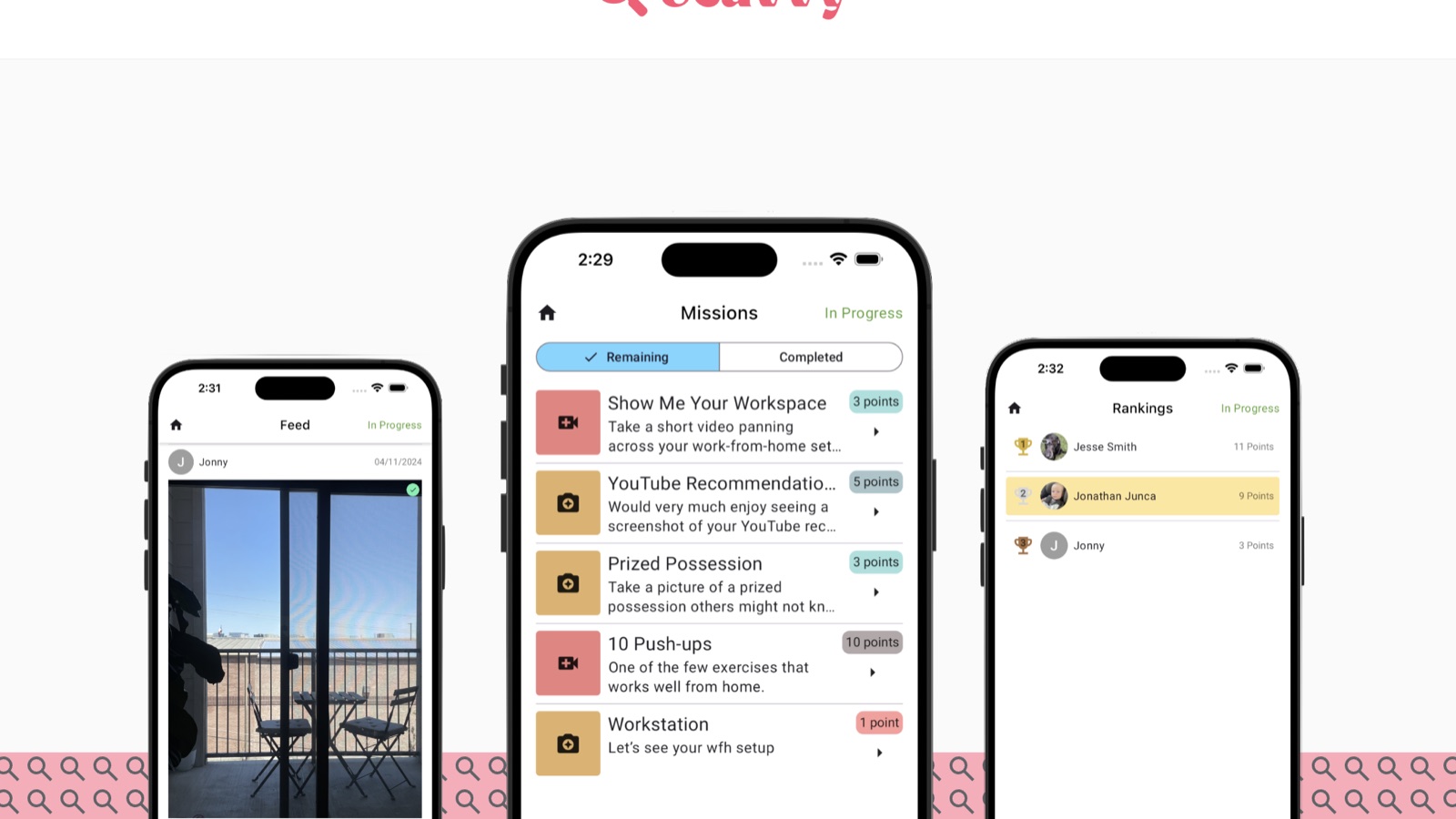
The missions use the four types a host can build in Scavvy: photo, video, GPS check-in and trivia. If you want missions tuned to your own company, your own building or your own inside jokes, type a sentence about your event into the free Mission Generator and it gives you 10 to 20 missions to start from, no signup required.
Why a scavenger hunt works for team building
Most team building activities ask people to talk about themselves, which the quiet half of the room dreads. A scavenger hunt asks people to do things, and the talking happens on the side while they argue about which way to go. Three things make it work in a corporate setting:
- It mixes people who never work together. Put finance with engineering and a new hire with the person who has been there twelve years, and give them a shared problem for an hour. Nobody has to be introduced; the mission does it.
- It produces something. Every photo and video lands in one feed the whole company can scroll during the debrief and for weeks after. That feed becomes the memory of the day in a way a trust fall never does.
- It scales. The same mission list works for a 12-person team on one floor and a 100-person department across a campus. You add teams, not effort.
The test is simple: if you can describe the hour as "go here, do this, prove it," it works as a hunt.
How to set it up
Plan on 15 minutes of setup the day before and about 10 minutes on the day. The decisions that matter:
- Teams of four. Three is fine, five starts to leave someone standing at the back. Assign teams yourself so departments get mixed; do not let people pick.
- One phone per team. Everyone joins from the invite link or code, but only one person needs to hold the phone for submissions. Rotate the phone every few missions so the same person is not stuck being the photographer.
- Twelve to fifteen missions for an hour. Teams should finish most of the list. A hunt where everyone completes 80 percent feels fair; a hunt where nobody gets past half feels like homework.
- Points that reward the hard ones. Give routine photo missions 100 points, trivia 150, video 200 and anything that requires a walk or a stranger's help 300. The leaderboard sorts itself out.
- Three rules, said out loud. Stay together as a team, nothing that interrupts someone actually working, and everyone back at the start when the timer ends whatever the score.
Build the missions in the web builder at your desk, send one invite link to the whole group, and have teams join while they find their seats. That is the entire technical setup.
Team building scavenger hunt ideas for the office
Indoor, no travel, and the whole thing fits between two meetings. These ten assume an ordinary office with a kitchen, a reception area and a few meeting rooms. Order them so that teams start in different places, or every team will be photographing the plant in reception at the same moment.
- gpsCheck in at the front desk before anything else. Say good morning to whoever is sitting there.
- photoPhotograph the oldest thing in the office and write one line on what it is for.
- photoYour whole team in a meeting room recreating the company logo with your bodies.
- triviaWhat year did the company move into this building?
- videoTwenty seconds of the whole team explaining the company's first product to a five-year-old.
- photoFind a mug that belongs to someone on a different floor and photograph it with its owner's permission.
- photoThe messiest cable situation in the building. Tidy it and photograph the after for the full score.
- triviaHow many meeting rooms are named after something other than a city?
- videoFilm a ten-second commercial for the office kitchen. Someone must say "limited time offer."
- photoA photo of your team with the person who has worked here the longest, and the year they started written on a sticky note.
The mug mission and the longest-serving colleague mission are the ones people talk about afterwards, because they force a team to go and speak to someone outside the hunt. Keep at least two missions like that in any office list.
Missions for the block around the office
When you can spare 90 minutes and the weather is on your side, send teams out the front door. A city hunt needs a boundary (three blocks in any direction is plenty) and a GPS check-in at the far edge so teams actually walk. These ten work in almost any downtown or business park.
- gpsCheck in at the coffee shop farthest from the office within the boundary.
- photoA street sign that could be a band name. The whole team posing like the album cover.
- photoSomething that has been there longer than the company. A plaque, a cornerstone, a tree.
- videoA stranger saying the company name on camera. Ask nicely, and thank them on the clip.
- triviaHow many floors does the tallest building you can see from the front door have?
- photoThe best lunch spot nobody on your team has tried, photographed from outside with the menu visible.
- photoYour team's reflection in a shop window, with everyone doing a different pose.
- gpsCheck in at the nearest public park, bench or green space and photograph the view from it.
- videoFifteen seconds of your team giving directions back to the office without pointing.
- photoA piece of public art with one team member matching its pose exactly.
Put the two GPS check-ins at opposite ends of the boundary. Teams have to choose a route, and the choosing is half the team building.
Missions for an offsite or retreat
At an offsite you usually have grounds, a venue staff and a group that has already spent a morning in sessions. A hunt in the slot after lunch wakes people up and gets them outside before the afternoon block. These ten assume a hotel, conference center or rented house with some outdoor space; swap the specifics for your venue.
- gpsCheck in at the farthest point of the property you can reach without leaving it.
- photoYour team stacked into a human pyramid, or the safest version of one you can manage.
- videoThirty seconds of your team pitching this venue to the company as next year's location. Be persuasive.
- triviaWhat was the theme of this morning's first session, in three words or fewer?
- photoA member of venue staff holding something that represents your team. Ask first, and tip if there is a jar.
- photoThe whole team in the same photo with nobody's feet touching the ground.
- videoA team member teaching the rest of the team a skill in twenty seconds. A knot, a dance step, a card trick.
- photoSomething in nature that looks like your company's logo, product or mascot.
- triviaName every person on your team's middle name. One wrong answer and the team gets zero.
- photoYour team's reaction to the view from the highest point on the property. No smiling allowed.
The middle-name mission looks like filler and is not. It makes four people who met at breakfast learn something about each other, and it takes about a minute.
Run of show for a one-hour hunt
Whatever list you use, the shape of the hour is the same. This is the schedule for an office hunt with 40 people in ten teams; stretch the play window to 60 minutes for a city hunt.
| Time | What happens | Host's job |
|---|---|---|
| 0:00 | Teams announced, everyone joins from the link on the screen | Read the three rules, point at the timer |
| 0:10 | Hunt opens | Watch the feed, like the good ones, nudge slow teams |
| 0:45 | Five-minute warning | Announce it loudly; the leaderboard usually reshuffles here |
| 0:50 | Hunt closes, everyone back at the start | Put the feed on the big screen |
| 0:55 | Debrief and prizes | Show the top three photos and the winning team; hand out something small |
The debrief is not optional. Scrolling the feed together, with the whole room reacting to the human pyramid and the kitchen commercial, is where the team building actually lands.
Mistakes that flatten a good hunt
Most hunts that fall flat do so for one of these reasons.
- Too many missions. Thirty missions in an hour means everyone rushes and nobody finishes. Pick twelve to fifteen and let teams do them well.
- Missions that need a specific thing. "Photograph the red stapler" fails the moment someone borrows the stapler. Write missions about categories, not objects: "the reddest thing on the third floor."
- Letting teams self-select. Friends pick friends, and the hunt becomes the same lunch table it always is. Assign the teams.
- No score for effort. If a lazy photo scores the same as a committed one, the committed team stops trying. Give the big missions more points than the easy ones, and name the best submissions in the debrief.
- Skipping the debrief. Teams finish, look at their phones, and go back to their desks. Bring them to one room and put the feed on the screen.
- Interrupting people who are working. If half the office is on calls, missions that involve talking to colleagues will annoy the half that is not playing. Time the hunt for when the floor is quiet, or keep it to the block outside.
Making the list your own
The 30 missions above are a starting point, and the best hunts always have a handful that could only exist at your company: the product name nobody can pronounce, the meeting room everyone avoids, the founder's story that every new hire hears in week one. Write three or four of those and mix them into whichever group fits your day. If you would rather not start from a blank page, describe your event in one sentence in the Mission Generator, take the missions it suggests, and edit them until they sound like your team. Then build the hunt, send the link, and get out of the way.